top of page

Pre-K Under Siege by AI Slop - A Rapid, Teacher-Friendly Playbook for Safer Classroom Media
Understand what's next. Explore our deep dives, case studies, and articles on artificial intelligence, modern education, and digital strategies.


Pre-K Under Siege by AI Slop - A Rapid, Teacher-Friendly Playbook for Safer Classroom Media
Early-childhood classrooms are becoming the front line of a new media quality crisis. Teachers are now filtering not only ads and distraction, but also high-volume AI-generated children’s videos that look educational at first glance and fail basic standards on accuracy, coherence, and developmental fit. This issue matters now because demand for digital classroom content is rising while content production has become near-instant. The gap between what is easy to publish and wha
3 days ago4 min read


NYC’s K-8 AI Moratorium Is a Policy Masterclass - Copy the Wins, Avoid the Pitfalls
District leaders rarely get a clean policy window, but New York City’s September 2, 2026 decision on student-facing generative AI created exactly that. The country’s largest school system moved from draft guidance debates to a concrete one-year moratorium for 2-K through 8th grade, while preserving tightly controlled high school pathways. For districts trying to balance innovation, student safety, teacher workload, legal compliance, and public trust in the 2026-27 school year
Sep 74 min read


Question, Verify, Repeat - How Schools Turned a Viral Chatbot Map Mistake into a New AI Literacy Standard
AI literacy is moving from abstract policy language to practical classroom instruction - and that shift matters because schools are no longer asking only “How do we use AI?” but “How do we teach students to question AI?” A clear signal of this shift came in AP’s August 21, 2026 reporting from U.S. districts preparing for back-to-school: teachers are now using live chatbot failure demos - including a widely shared “world map” prompt that produced obvious errors - to show stude
Aug 214 min read


When AI PD Becomes Policy Theater - The Trust Crisis Driving Teacher Backlash
When AI professional development is done poorly, districts do not just miss an innovation opportunity - they actively damage trust. That is exactly why the current teacher backlash matters. Educators are not rejecting improvement. They are rejecting implementation that feels imposed, shallow, and disconnected from classroom reality. In a moment when AI is moving quickly into school systems, the quality of district change management is now the difference between meaningful ado
Aug 194 min read


Gemini Appeared in Google Classroom - The Admin Kill‑Switch Districts Are Using to Reclaim Control
Teachers are not imagining it - Gemini surfaces in Classroom and Workspace are now real operational settings, not just future roadmap items. In back-to-school weeks, that difference matters. A district can think it has "turned Gemini off" and still see Gemini entry points in Docs, Classroom workflows, or Chrome because controls are split across multiple admin panels. For district IT and instructional leaders, the immediate need is not debate. It is a clean control model: what
Aug 173 min read


50 Campuses, One Model - Alpha Schools’ AI Push Exposes the Tutoring-vs-Teaching Fault Line
When a private school network scales from roughly a dozen campuses to around 50 in one school year, it is no longer an experiment at the edge of education - it becomes an operating model that other founders, investors, and district leaders will study closely. That is exactly what makes Alpha Schools’ 2026 expansion so important for EdTech: it turns "AI-first schooling" from a concept into a multi-market rollout challenge with real staffing, compliance, quality-control, and pa
Aug 34 min read


Docebo's MCP Server Signals the MCP Era - 6 Musts for Secure, Production-Ready LMS Integration
The LMS is no longer just a destination interface. In July 2026, it became a callable service layer inside enterprise AI assistants, and that shift has immediate consequences for L&D, IT, and security teams. Docebo’s general availability release of its MCP Server on July 22, 2026 marks a practical turning point: learning operations can now happen in ChatGPT, Copilot, Claude, and Gemini instead of only inside the LMS UI. That sounds like a UX improvement, but the deeper change
Jul 224 min read


Read Along Goes Mainstream - 6 Actions District Leaders Must Take to Deploy and Govern AI Reading Tutors
Google’s decision in June 2026 to make Read Along in Google Classroom available to all Google Workspace for Education editions marks a strategic shift in K-12 AI adoption: literacy tutoring is moving from pilot and premium territory into the default classroom stack. Interest rose quickly in early July because this is not just a product update - it is a distribution event. When a reading tool is embedded in Classroom, enabled through admin policy, and attached to everyday assi
Jul 154 min read


NotebookLM Just Became a Full Research Workbench - 5 Steps Schools Must Take to Secure, Scale, and Assess It
NotebookLM’s June 2026 upgrade matters because it changes the unit of work in education from “ask a chatbot” to run a full research workflow. For schools and universities, that is a major operational shift. Students can now move from scattered notes to source-grounded outputs faster. Staff can move from fragmented documents to analysis-ready artifacts in one workspace. And leaders now need policy guardrails that fit an AI system capable of reasoning, code execution, and multi
Jul 103 min read
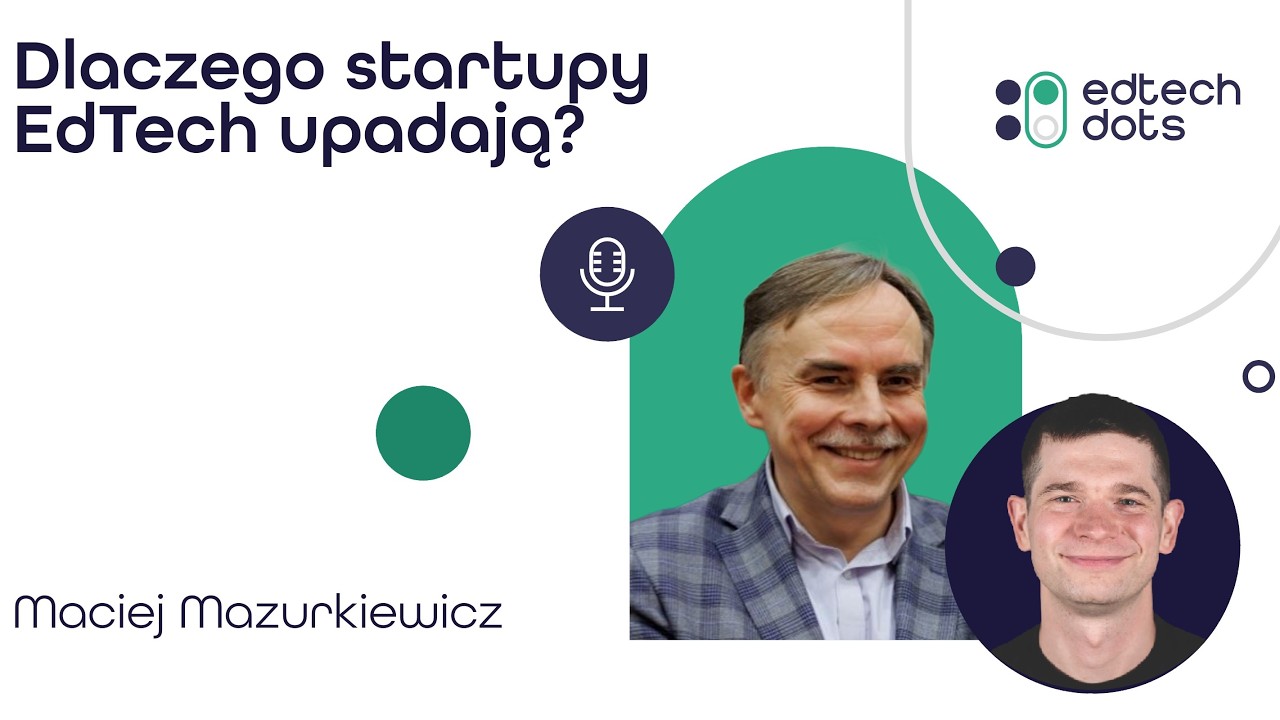
Why EdTech Startups Fail: Vision Is Not Enough
Every startup begins with a dream. A founder sees a problem, imagines a better way to solve it, and starts building. In EdTech, that dream often sounds especially meaningful: better tools for teachers, more engaging learning for students, smarter use of technology in schools, or wider access to quality education. But as Maciej Mazurkiewicz points out in our EdTech Dots conversation, a dream is not enough. Maciej has almost 20 years of experience working with startups, much of
Jul 28 min read


Canvas’s IgniteAI Free Window Closes June 30 - 7 Critical Moves CIOs, Provosts, and Instructional Leaders Must Make Now
In EdTech, the most important AI decision is often not model quality - it is packaging, governance, and timing. Canvas institutions now face a hard commercial trigger: in the U.S., free access to advanced IgniteAI capabilities ends on June 30, 2026. After that date, continued access requires higher Canvas tiers. That deadline turns AI strategy into an operational decision for CIOs, provost offices, instructional design leaders, and procurement teams. This is no longer a gener
Jun 264 min read

AI in Education: The Real Risk Is Not Cheating — It Is Outsourcing Thinking
Artificial intelligence has already entered the classroom. Students use it to write essays, solve problems and prepare presentations. Teachers use it to create lesson plans, generate exercises and reduce administrative work. Parents are trying to understand whether AI is a useful learning tool or simply another shortcut. But the most important question is not whether someone used AI. The real question is: what happened to their thinking in the process? This was the central th
Jun 188 min read
Want to see how this process can work for you?
Share your project details with us. We’ll point you in the right direction and tailor the perfect collaboration model to get things moving.
bottom of page